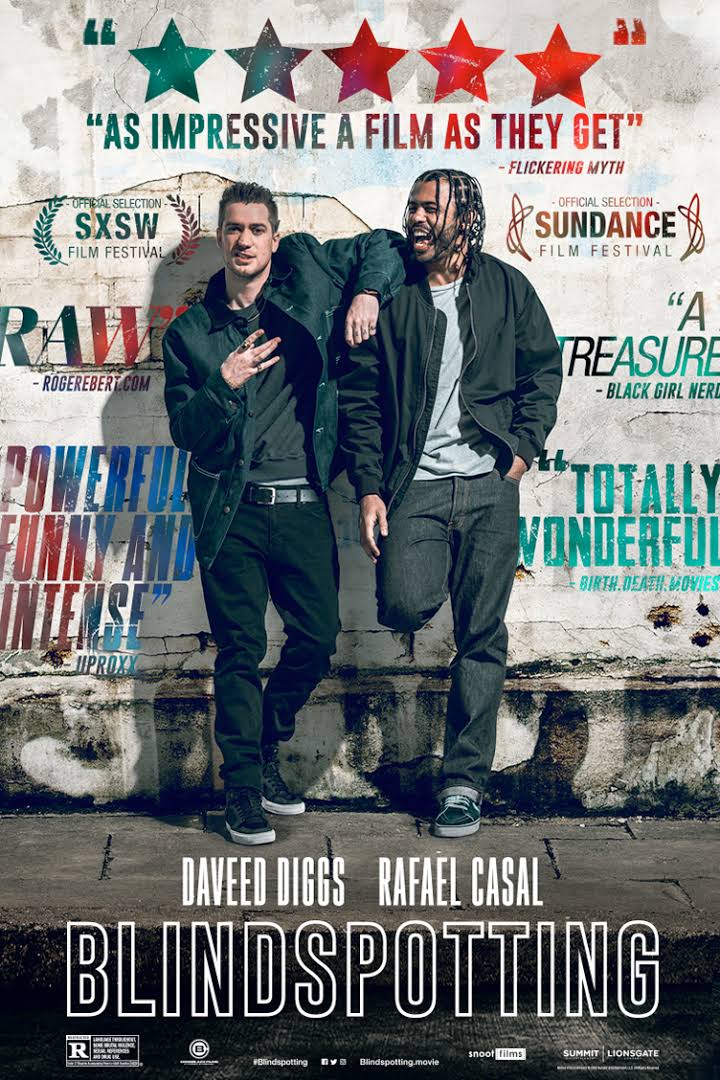
Don’t be surprised come the end of the year, when all the ballots are collected, counted and double-checked that Blindspotting will be nominated as one of the best pictures of the year.
It’s that good and fits in nicely with the modern voting habits of the academy that seem to find niche, lower-budget filmmaking done well being more and more accepted into the conscious of mainstream award events.
Similar to the earlier film I reviewed, Sorry to Bother You, Blindspotting was acquired at the Sundance Film Festival, predominately features black minorities living in Oakland, from novice feature directors with little to no well-known lead actors.
However, unlike Boots Riley’s dystopian view on life in Oakland that was more focused on it’s thesis statement over craft and performance, first time feature director Carlos Lopez Estrada’s work is poetic and thoughtful, cradled in love but not afraid to strip it down and expose what once was and now is.
The story follows two 30 something adults, Collin (Daveed Diggs) a black parolee and Miles (Rafael Casal), his hot-headed, silver-tongued white childhood friend.
Collin and Miles play wonderfully off each other with Miles stealing almost every scene he’s in (I’d be surprised if he wasn’t nominated for a best supporting actor award), expect when the truly emotional and profound elements are explored and Collin takes center stage.
Collin is three days away from getting off probation and starting a new life but on his way home witnesses a black man being shot and killed in the back by a white Oakland police officer. This weighs on his conscious and is profoundly brought back in the fold at a later time but thankfully Estrada and the two screenwriters (Diggs and Casal) feel the need to explore the roots of Oakland first and it’s changing ways.
With time things change. People, places and even a city get entire make-overs. I’m sure this isn’t just a Bay Area thing but as a Nor-Cal resident you can’t help but notice the gentrification taking part in Oakland, both good and sad.
As moving workers, Collin and Miles see it everyday, their city and its homes being gutted out and refurbished by entrepreneur transplants with a huge backings of wealth but along with the old go the memories of something once loved. But as an artist who needed his work backed and packed showed the two men, the town was once covered in Oak Trees and open space. Urban sprawl was just a progression.
Things change over time.
Even within this film you begin to see that it’s a rite of passage these two friends have to make forcing themselves to take a hard look a at one another and understanding they too are a spoke in the wheel turning in the wrong direction.
Deconstructing the use of the N-word between two ethnicities (in a way that you wouldn’t expect). What are you teaching your kids, both seen and heard? What does it mean to be a man and having the maturity to understand that meaning? Are we hurting each other by keeping the status quo and not recognizing the opportunities to change for the better?
There are so many great statements in this film, with ‘Blindspotting’ and it’s definition described within the film being the most telling.
It’s fresh, creative, entertaining and poignant. Blindspotting isn’t just a decent independent film but the best picture of the year thus far.

 Vic's Flick Picks