
Spike Lee’s new joint, BlacKkKlansman, comes in hot with social commentary from a film that takes place in the late 70s and juxtaposes it with our current Trump era of politics and social normalcies, revealing to the viewer that we may not have come that far from those times after all.
It’s not Lee’s best showing as a director, with much of the content and his political expression being spot on the nose in reference to white nationalism and unfair treatment of minorities.
Yes it’s important not to forget so that we don’t’ repeat the errors of our ways in the future but from a filmmaking and artistic standpoint showing and not telling is the way to make the strongest impact and thus avoiding some of the obvious preachiness that often times overtook the film.
To be honest it’s Spike Lee and that’s probably what he was going for but for me it felt like pushing a square peg into a round hole.
The idea of a black man gaining access and acceptance into the Ku Klux Klan is novel enough, not to mention that it’s actually based on a true story. John David Washington (Denzel Washington’s son) did a decent job of playing the lead Colorado Springs detective, Ron Stallworth, who infiltrated the local chapter of the KKK by presented himself as a white bigot on the phone while fellow undercover officer Flip Zimmerman (Adam Driver) portrayed the KKK recruit in real life.
But overall the story lacked zip and coherent movement. Yes, the detective’s desire was to infiltrate the Klan but for what need or goal? It was more like ‘okay we started this. What do we do next?
These were dimwitted hooligans that were racist. In real life these people are scum but in movie sense they weren’t bad enough to drawl in that emotional force, we as viewers need to feel to want to see this situation through to the end.
Most of the tension comes from the idiotic KKK chapter members and the nearly as incompetent Colorado Springs detectives basically going into each situation haphazardly, making you wonder which side is going to do something stupid that gets them killed first. It was uncomfortable tension at best.
There were a few powerful moments most notably the critique of the film Birth of a Nation (1915), which was both profound in its use of cinematic tools of expression and also disturbing as it showcased white nationalism and propelled the KKK movement in a heroic light.
Birth of a Nation was the rallying cry for the KKK and while viewing the film within the film, members of the Klan stood up in applause chanting “White Power” while simultaneously at a different location black students we’re chanting “Black power” after the speaker there told the story of his young childhood friend who was tortured, mutilated and roasted over a fire until death as a town of white folks cheered and applauded.
BlacKkKlansman is a film with an obvious agenda… To tell the truth about America’s past while simultaneously reminding us that its present is in great danger, as the end credits somberly play out news footage from last years Charlottesville events.
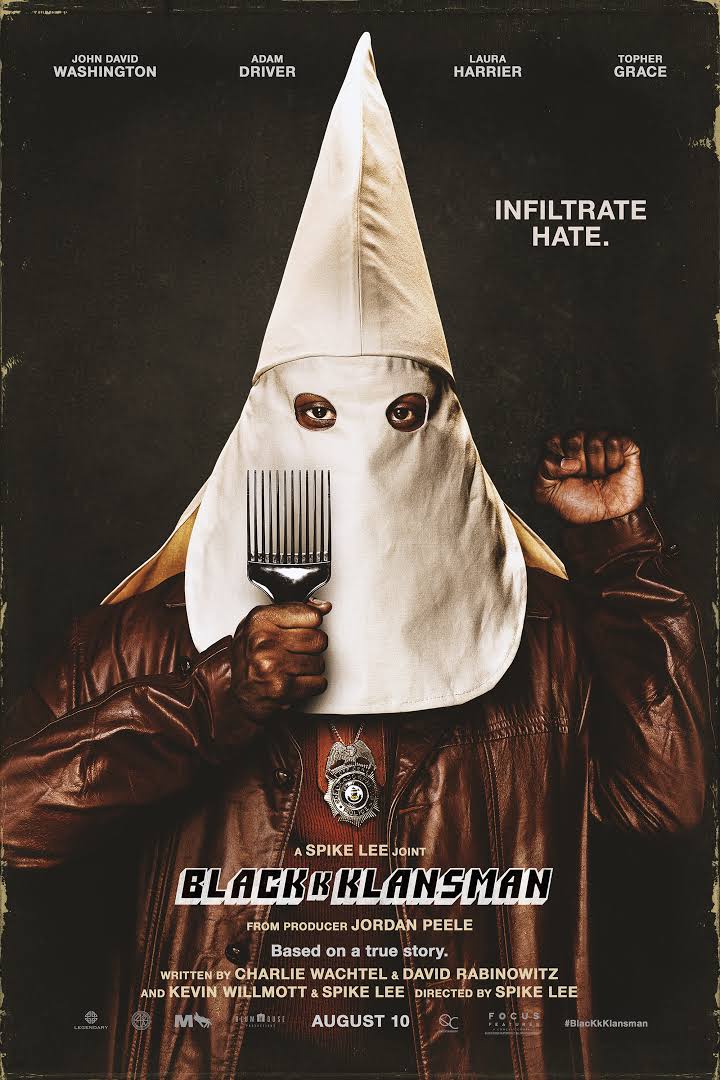 The message was there but the entertainment and art lagged behind and so did this decent but not all that good film as well.

 Vic's Flick Picks