
First Man is intense, primitive and at times a fatalistic experience watching it’s heroic men and woman that strove to chart the uncharted. To venture past the known, explorers of the modern universe… life and death resting in the balance of untested theories and equations while being shot from a rocket in a tin can.
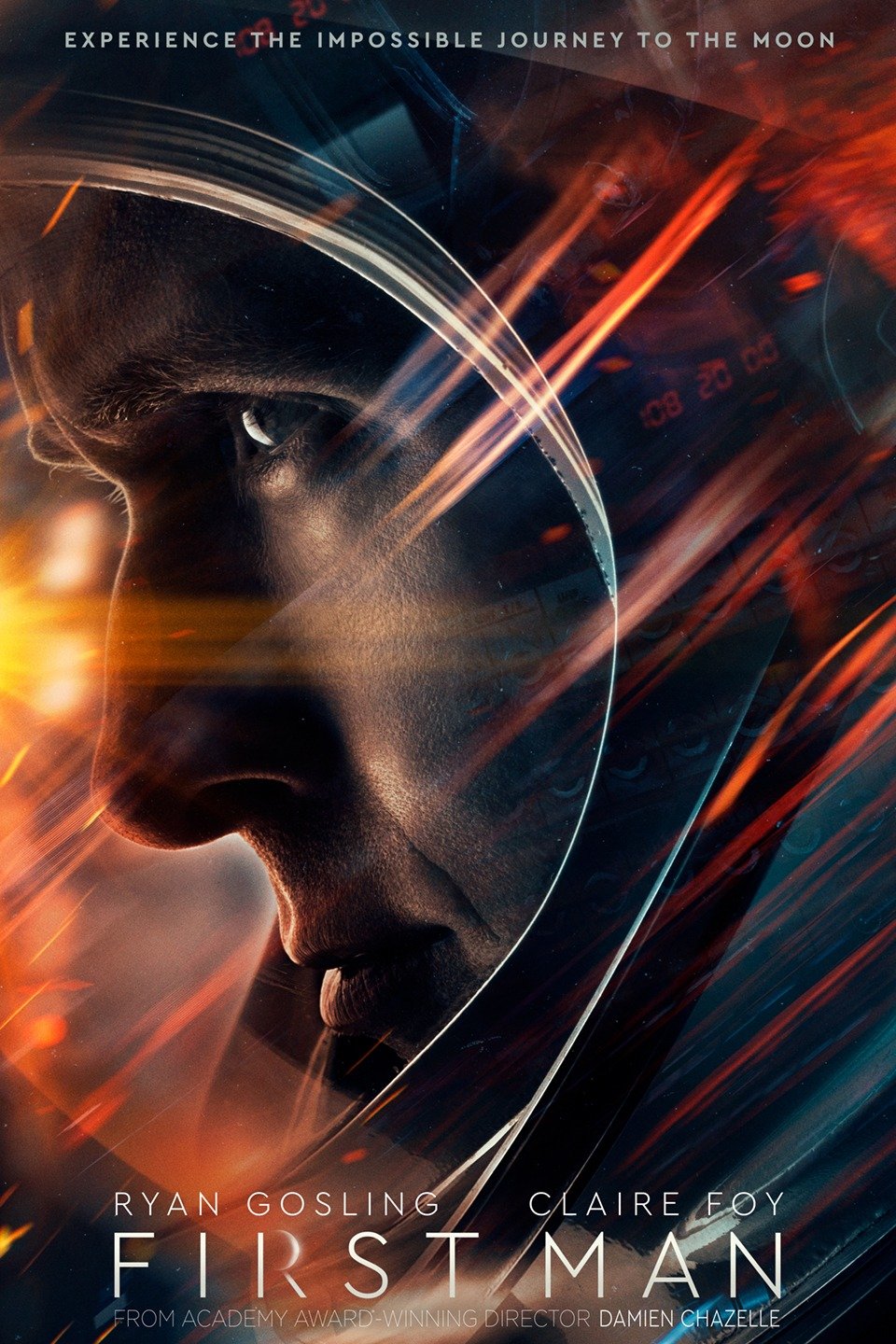
Director, Damien Chazelle (Whiplash, La La Land), ventures forward himself, past his musically based films into bold drama, deconstructing the life of astronaut Neil Armstrong (Ryan Gosling) and the painstaking path to become the first man to step on the moon.
As a millennial you grow up with regularly scheduled space exploration, we learned about Armstrong’s first steps and the success of NASA and the Apollo 11 mission in grade school, but how our world and country came to that monumental point is nearly lost on us.
The importance of the mission and risks involved getting there are articulated very well in Chazelle’s film.
From the opening credits of Armstrong testing out a high-altitude spacecraft, you hear the rumbling of tin on tin, metal clanging, straining to stay in one piece, fighting the known physics of the times and toward the theoretical.
You feel and sense the panic of the unknown grasping its grips around you, lost in space, a fiery death crash-landing? We feel the danger, yet, when staring into Armstrong’s eyes there’s no panic, fear yes but not panic. Despite being the most experienced, smartest people in the room wherever they go these explorers know the risk and push forward regardless.
Their sanctuary or death bed is a 6.1 million pound rocket packed with jet fuel, tons of electrical equipment, liquid nitrogen, fortified by earth made metal and Plexiglas designed to take you to a mass in space and somehow get you back alive.
If one thing goes wrong, the entire mission goes wrong.
Within this backdrop leading to the Apollo 11 mission you have Armstrong, his wife and his life. Much like his press conferences and media obligations you don’t get much from him, which even appears to bleed into his personal life relations with his family members.
You get the sense that he was born 300 years to late, better suited for family life if he were able to voyage out to sea for months or years at a time and explore the new world before returning back home to port.
It seems easier for him to focus on a mission, understand the theoretical and execute, rather than sitting home, remembering the pain of a lost child and the aftermath of comrades not returning home from a mission.
Chazelle’s choice of a jittery camera and tight shots over wide shots may put off some viewers but it was very consistent and never left you as a viewer comfortable with the scenery. From walking into a jet-propelled rocket for launch to crossing into the kitchen for dinner, Armstrong is steadfast in his approach on the viewer is always at a bit of discomfort.
It’s bold, engaging and thrilling and a perfect time in our history where patriotism and national pride have become politicized as catch phrases for the messenger communicating the content but in this film, it’s the American inspiration at it’s best.
Human nature, the spirit of man is astounding, to take on the difficult, nearly impossible tasks simply because we have to. We can’t help ourselves.
As JFK stated in the closing scenes, “It’s not because we want to but because we must.”

 Vic's Flick Picks