
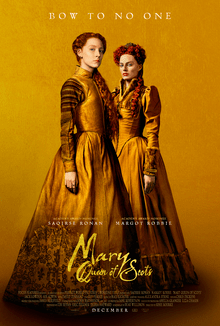
Mary Queen of the Scots is the the third such feature film that depicts the 16th century Mary Stuart, Queen of the Scots, royal rival to Queen Elizabeth Tudor of England and tragic character who’s eventual execution has left many historians and filmmakers wondering the nature of both Mary and her estranged relationship with her cousin, Queen Elizabeth.
Mary, played wonderfully by Saoirse Ronan in a powerful performance plays up the Queen as fierce, cunning and politically driven, for after being away in France for most of her life, she returns to Scotland to claim her rightful place on the throne as well as maneuver herself toward a potential push toward the English throne, which some in the country at the time beloved rightfully hers by birth.
There’s fear and angst in the English Queen and rightfully so. Her cousin’s presence in Scotland questions her legitimacy as queen, many of her countrymen are not to keen on her being protestant and just as importantly this is still a man’s world with two queens at the throne. Elizabeth’s knowledge of this weighs on her crown everyday, played with a melancholy loneliness by Margot Robbie, donning a fake nose and garish white makeup to hide her smallpox scars.
The interesting dichotomy in this film is the relationship between the two Queens, which some historians portray as contentious but here you get a sense of mutual respect and admiration. They are both threats and they know it but the resolve is never to destroy by brute force but by manipulating and infiltrating through strategic power plays of suitors, alliances and civic rebellions. And as the story continues there’s a recognized affection between two woman as outward disgust of men toward them intensifies.
The young queen of the Scots is cunning, fierce and confident in who she is but that’s also part of her downfall. The belief that she had absolute allegiance from her subjects and the people around her backfires as both her husband and half brother conspire against her in their own pursuit of the throne.
Elizabeth understands the shadows in the bushes and the constant threat of takeover. She offers up no heir or desired heir as her replacement, she refrains from suitors and above all will not engage in sex, for if she were to produce an heir, in her mind, her legitimacy as Queen will be challenged instantly by her child and the people that would try and overthrow her and use her kin as their own pawn.
It’s an different take from director Josie Rourke, who makes her feature film debut, guided by the charismatic Ronan and Robbie, great cinematography and good directing it’s a very entertaining film from start to finish and gives a bit of food for thought.
As Queen Elizabeth states in a letter written to Mary before her execution date, she essentially recognizes the difficult path her ‘sister’ had to take as that path was also difficult for her, however, to become the way she has, to maintain power atop the throne, she is “more man than woman, with only the crown that matters.”
A last statement by the director? Perhaps, but more than anything is rings sad and true.

 Vic's Flick Picks